
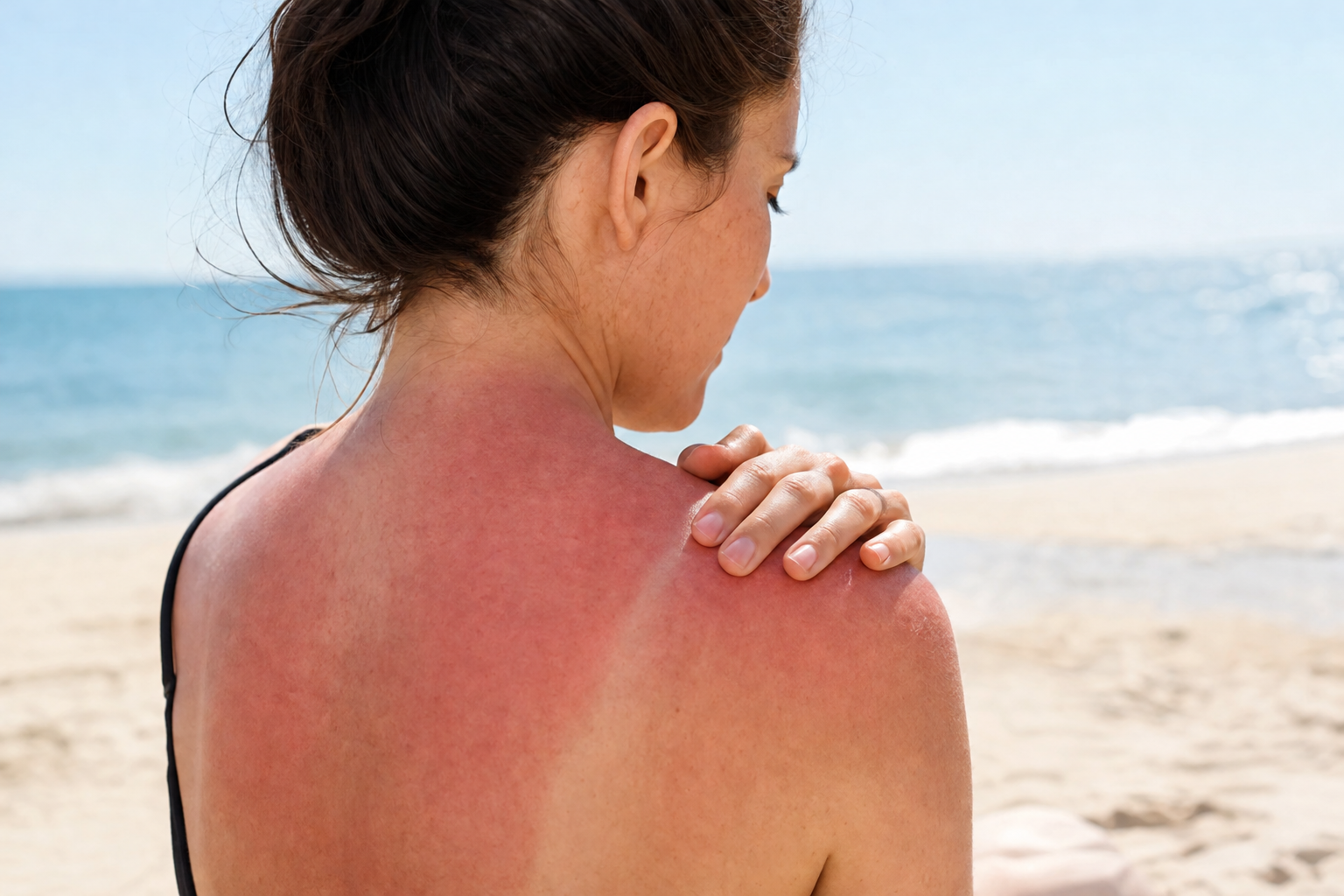
A day in the sun can quickly turn into painful, damaged skin. Sunburn is often treated as a temporary inconvenience involving redness, tenderness, and peeling. But a significant sunburn can involve blistering, swelling, dehydration, infection, and symptoms that affect the entire body. Knowing when medical evaluation is appropriate can help avoid complications.
At UNI Urgent Care, our team provides care for burns and other non-life-threatening injuries and illnesses. We also offer laboratory testing, X-rays, physicals, vaccinations, occupational health services, and other care options.
What Is a Sunburn?
More Than Surface Redness
A sunburn is skin damage caused by excessive exposure to ultraviolet, or UV, radiation. Skin may become red, warm, painful, swollen, itchy, or tender. Blisters can develop when damage reaches deeper layers. Symptoms may appear within hours, while severity can become clearer later.
Sunburn can happen to anyone. Repeated sunburns and UV exposure are associated with premature skin aging and increased skin cancer risk. Mayo Clinic’s sunburn guidance explains common symptoms and situations that warrant medical attention.
Why Severe Burns Matter
A more extensive burn can contribute to dehydration and may occur alongside heat exhaustion or heatstroke.
According to Cleveland Clinic’s sunburn information, large blistered areas, severe pain, fever, chills, faintness, dehydration, and infection are reasons to seek medical care. These symptoms should not be dismissed as simply having “too much sun.”
When Should a Sunburn Be Evaluated?
Large or Numerous Blisters
Blisters are a sign that the skin has sustained more substantial damage. Large, widespread, painful, or rapidly worsening blisters deserve medical evaluation.
Do not intentionally pop sunburn blisters. The intact skin helps protect the area underneath while it heals. If a blister breaks on its own, keep the area clean and protected, and watch for increasing redness, swelling, drainage, or worsening pain.
Severe Pain or Swelling
Mild tenderness is common, but pain that is intense, worsening, or interfering with normal activities may indicate a more serious burn. Significant swelling is another reason to have the area assessed.
Fever, Chills, Nausea, or Headache
A sunburn accompanied by fever, chills, nausea, headache, weakness, or unusual fatigue may indicate that the effects of heat and sun exposure are extending beyond the skin. WebMD’s sunburn guidance notes that severe sunburn can produce flu-like symptoms.
Do not simply wait for the skin to peel if symptoms are significant or worsening. Medical evaluation can help determine whether dehydration, heat illness, or another problem is contributing to how you feel.
Signs of Dehydration
Sunburn and prolonged heat exposure can increase the risk of dehydration. Watch for excessive thirst, dry mouth, dizziness, weakness, dark urine, or urinating less often than usual.
If you cannot keep fluids down, feel faint, become confused, or have severe dehydration symptoms, seek immediate medical attention. Emergency care may be appropriate for severe symptoms, especially when fainting, confusion, seizures, difficulty breathing, or very high body temperature is present.
Possible Infection
Damaged or blistered skin can lose some of its protective barrier. Infection may develop, particularly if blisters break or the area is repeatedly scratched.
Seek prompt medical advice if redness or swelling spreads, pain increases, pus develops, or fever appears. Prompt evaluation can help determine whether additional treatment is needed.
What Can You Do at Home for a Mild Sunburn?
Cool the Skin
Move indoors or into shade and stop further sun exposure. A cool, damp cloth or cool shower can help reduce discomfort. Avoid putting ice directly on sunburned skin because extreme cold can further irritate damaged tissue.
Moisturize Carefully
After cooling the skin, apply a gentle moisturizer or aloe vera product. Avoid products that contain alcohol if they sting or dry the skin further.
For some mild sunburns, an over-the-counter 1% hydrocortisone cream may help with itching and inflammation when used as directed. If you are unsure whether a product is appropriate, ask a healthcare professional or pharmacist.
Drink More Fluids
Hydration matters while your body is recovering. Drink water regularly, particularly after spending significant time outside.
Protect the Burned Skin
Stay out of direct sunlight while your skin heals. If you must go outside, cover the affected area with loose, protective clothing and use appropriate sun protection on exposed skin that is not burned.
Do not peel the skin or pull off loose areas prematurely. Allow damaged skin to shed naturally.
How Our Urgent Care Team Can Help
Evaluation of Burns and Related Symptoms
At UNI Urgent Care, our team evaluates non-life-threatening injuries, including burns, as part of our urgent care services. Our team can examine the affected skin, review the extent of the burn, ask about your symptoms and sun exposure, and determine whether additional treatment or follow-up is needed.
Our Urgent Care Services are designed for situations that need prompt medical attention but are not life-threatening emergencies.
Additional Testing When Appropriate
UNI Urgent Care also offers on-site laboratory testing and X-rays for conditions where those services are medically appropriate. Sunburn is usually diagnosed through a physical evaluation, while our broader diagnostic capabilities can help when another injury or illness is involved.
Sunburn Prevention Starts Before You Go Outside
Use Multiple Layers of Protection
Preventing sunburn is the best way to avoid a severe burn. Use a broad-spectrum sunscreen with an appropriate SPF, apply enough product, and reapply as directed, especially after swimming or sweating.
Seek shade when possible, wear a wide-brimmed hat, use UV-protective clothing, and consider sunglasses that provide UV protection.
Pay Attention to Time and Symptoms
Do not wait until your skin is painfully red before leaving the sun. Take breaks in shade, drink fluids, and watch for headache, dizziness, weakness, nausea, or unusual fatigue.
Children can be vulnerable to sun exposure and dehydration.
When Is the Emergency Room More Appropriate?
Urgent care is appropriate for many non-life-threatening conditions, but some symptoms require emergency medical attention. Seek emergency help for severe confusion, loss of consciousness, seizures, severe breathing problems, or signs of serious heatstroke.
Mayo Clinic advises immediate medical care for a sunburn accompanied by severe dehydration, confusion, faintness, or a fever above 103°F with vomiting. The Mayo Clinic first-aid guidance provides additional warning signs.
Frequently Asked Questions
Can a sunburn really cause dehydration?
Yes. Significant sun exposure, heat, sweating, and extensive skin damage can contribute to fluid loss and dehydration. Drink fluids while recovering and seek medical care for severe dizziness, fainting, confusion, very low urine output, or inability to keep fluids down.
Should I pop a sunburn blister?
No. Avoid intentionally popping blisters. The blister can provide protection for the damaged skin underneath. If one breaks, clean the area and cover it with a clean, nonstick dressing. Seek care if infection develops.
How long does a sunburn take to heal?
Mild sunburn often improves over several days, although peeling may occur afterward. More significant burns can take longer to heal. Large blisters, severe pain, worsening symptoms, or signs of infection should be evaluated rather than managed by simply waiting.
Can people with darker skin get sunburned?
Yes. Anyone can experience UV-related skin damage. The visible redness may be less noticeable on darker skin, but pain, warmth, swelling, tenderness, blistering, and peeling can still occur.
Is every sunburn an urgent care emergency?
No. Many mild sunburns can be managed at home with cooling, hydration, moisturization, and protection from additional sunlight. Medical care becomes more important when symptoms are severe, extensive, worsening, or accompanied by systemic symptoms such as fever, chills, dizziness, nausea, confusion, or dehydration.
Can I prevent future sunburns?
Yes. Combine sunscreen with shade, protective clothing, hats, sunglasses, and breaks from direct sunlight. Avoid intentionally tan; UV exposure can occur even when the weather feels cool.
Why Choose UNI Urgent Care?
When a sunburn is more painful or extensive than expected, evaluation can clarify what is happening and what to do next. Our team treats patients for common illnesses and injuries. Most services are available by walk-in, while some require appointments.
Our care also includes illnesses and injuries, STD testing, physicals, occupational medicine services, DOT exams by appointment, travel and flu vaccines, pre-operative exams, and diagnostic services. You can learn more through our Latest News & Blogs or explore our UNI Urgent Care homepage.
Conclusion
A sunburn may begin as red, uncomfortable skin, but a severe burn can become a genuine medical concern. Large blisters, severe pain, extensive swelling, fever, chills, nausea, dehydration, confusion, faintness, and signs of infection are all reasons to take symptoms seriously.
Mild sunburn can often improve with cool compresses or showers, moisturizer or aloe vera, adequate fluids, and strict protection from additional UV exposure. However, worsening symptoms should not be ignored.
At UNI Urgent Care, our team is available to evaluate non-life-threatening burns and related symptoms and help determine the next appropriate step. Our priority is practical, patient-centered care.
If your sunburn is more than mild, you are developing blisters, or you feel sick after prolonged sun exposure, consider getting evaluated rather than assuming the problem will resolve on its own.
UNI Urgent Care
📍 Corporate Office Address: 826 Washington Road, Suite 110A, Westminster, MD 21157
Phone: (410) 751-7480
Website: uniurgentcare.com
