
Tick Bites in Maryland: What You Need to Know About Deer Ticks and Fast Treatment
As warmer weather arrives, tick season in Maryland becomes a growing concern for families, hikers, pet owners, and anyone spending time outdoors. While ticks are small, the health risks they carry can be serious—especially when it comes to Lyme disease.
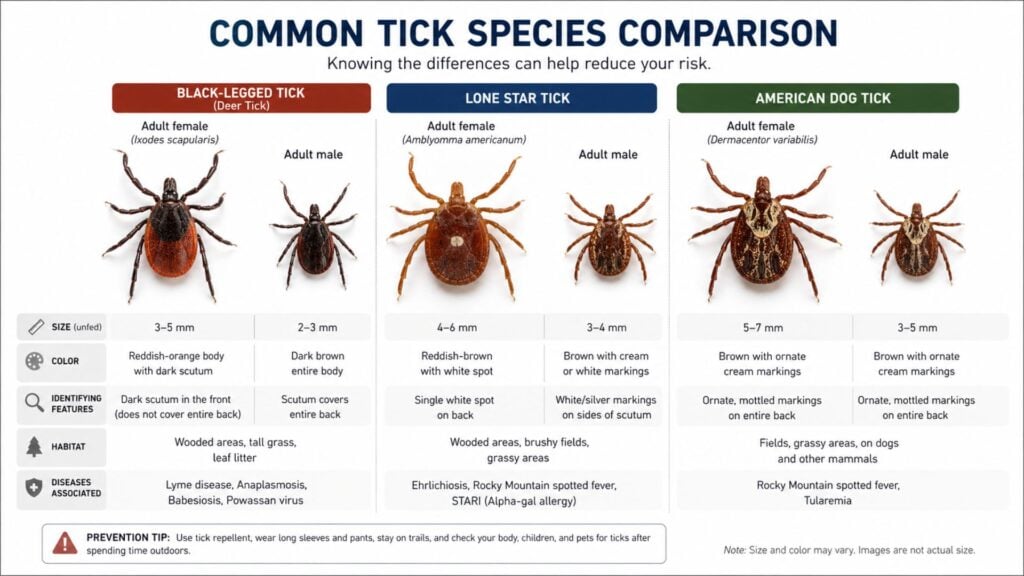
The most common ticks in Maryland include the Black-legged Tick (Deer Tick), American Dog Tick, and Lone Star Tick. Of these, the Black-legged Tick is most strongly associated with Lyme disease transmission.
Understanding how to identify these ticks, prevent bites, and recognize early symptoms can help protect your health. When in doubt, prompt medical evaluation is always recommended.
At UNI Urgent Care, we provide safe tick removal, bite evaluation, and treatment guidance when symptoms or concerns arise.
The 3 Most Common Ticks in Maryland
1. Black-legged Tick (Deer Tick)
The Black-legged Tick, also known as the Deer Tick, is the smallest of the common ticks in Maryland—and the most medically significant due to its role in transmitting Lyme disease.
Where They Are Found
- Wooded areas
- Tall grasses
- Leaf litter
- Gardens
- Hiking trails
Because they are very small, especially in the nymph stage, they can be difficult to detect before attachment.
Why It Matters
The Black-legged Tick is the primary carrier of Lyme disease. Early symptoms may include:
- Bullseye rash (erythema migrans)
- Fever
- Fatigue
- Headache
- Muscle and joint pain
Early diagnosis and treatment are important to reduce the risk of complications.
2. Lone Star Tick
The Lone Star Tick is identified by the distinctive white dot on the adult female’s back.
Where They Are Found
- Forest edges
- Brushy or overgrown areas
- Backyards
- Parks
Health Concerns
While not a primary carrier of Lyme disease, Lone Star Ticks can still cause:
- Skin irritation
- Allergic reactions
- Other tick-borne illnesses
Prompt removal is still strongly recommended.
3. American Dog Tick
The American Dog Tick is larger and easier to spot than the Deer Tick.
Where They Are Found
- Grassy fields
- Walking paths
- Lawns
- Outdoor recreational areas
Health Concerns
These ticks may cause localized irritation and can transmit other bacterial infections. Early removal helps reduce risk.
Early Treatment Is Key
If you find a tick attached to your skin, prompt removal is one of the most important steps you can take.
Improper removal may increase irritation or leave parts of the tick behind, increasing infection risk.
Seek medical care if:
- The tick is firmly attached or difficult to remove
- You are unsure how long it has been attached
- You develop redness, swelling, or rash
- You experience fever or flu-like symptoms
- You are concerned about Lyme disease exposure
At UNI Urgent Care, we provide fast evaluation so you can get clarity and peace of mind.
How to Prevent Tick Bites
Prevention is the best protection against tick-borne illness.
Tick Prevention Tips
- Wear long sleeves and long pants outdoors
- Use EPA-approved insect repellent
- Stay on cleared and marked trails
- Avoid tall grass and leaf piles
- Perform full-body tick checks after outdoor activity
- Check children and pets carefully
- Shower soon after being outdoors
High-Risk Areas to Check
- Behind the knees
- Scalp and hairline
- Behind the ears
- Underarms
- Waistline
- Groin area
When to Visit UNI Urgent Care
Not every tick bite leads to illness, but early evaluation can prevent complications.
Visit Urgent Care if you:
- Need safe tick removal
- Notice signs of infection
- Develop a rash after a bite
- Are concerned about Lyme disease exposure
- Want reassurance after outdoor exposure
Fast care helps reduce uncertainty and ensures appropriate next steps.
Final Thoughts
Ticks are common in Maryland, especially during spring and summer months. However, awareness, prevention, and early treatment greatly reduce health risks.
The three main ticks to watch for are:
- Black-legged Tick (Deer Tick)
- Lone Star Tick
- American Dog Tick
Among these, the Deer Tick is most closely associated with Lyme disease. If you experience a tick bite and are unsure what to do, UNI Urgent Care is here to provide fast, reliable care.
Frequently Asked Questions
1. What is the most dangerous tick in Maryland?
The Black-legged Tick (Deer Tick) is the most concerning because it can transmit Lyme disease.
2. When should I see a doctor after a tick bite?
You should seek medical care if you develop a rash, fever, flu-like symptoms, or are unsure how long the tick was attached.
3. Can urgent care remove a tick?
Yes. Urgent care can safely remove ticks and evaluate the bite for signs of infection or Lyme disease risk.
4. What are early signs of Lyme disease?
Early signs may include a bullseye rash, fever, fatigue, headache, and muscle or joint pain.
5. How can I prevent tick bites?
Wear protective clothing, use insect repellent, avoid tall grass, and perform full-body tick checks after outdoor activity.
Conclusion
Tick bites are common in Maryland, especially during the warmer spring and summer months, but early awareness and quick action can make all the difference. Understanding the three main ticks to watch for—Black-legged Tick (Deer Tick), Lone Star Tick, and American Dog Tick—helps reduce the risk of complications, especially when Lyme disease is a concern.
The Black-legged Tick remains the most important to monitor due to its connection to Lyme disease, making prompt removal and early treatment essential. Even if you are unsure whether a bite is serious, professional evaluation can provide peace of mind and help prevent infection or worsening symptoms.
A small step today—like checking for ticks after outdoor activities or seeking urgent care for safe removal—can prevent bigger health issues later.
Before tick season becomes a problem, prioritize prevention and know where to turn for fast, reliable care.
Professional guidance and urgent care support are available at:
UNI Urgent Care
📍 Corporate Office Address: 826 Washington Road, Suite 110A, Westminster, MD 21157
📞 Phone: (410) 751-7480
🌐 Website: https://uniurgentcare.com/
Stay aware. Act early. Protect your health with confidence.
