
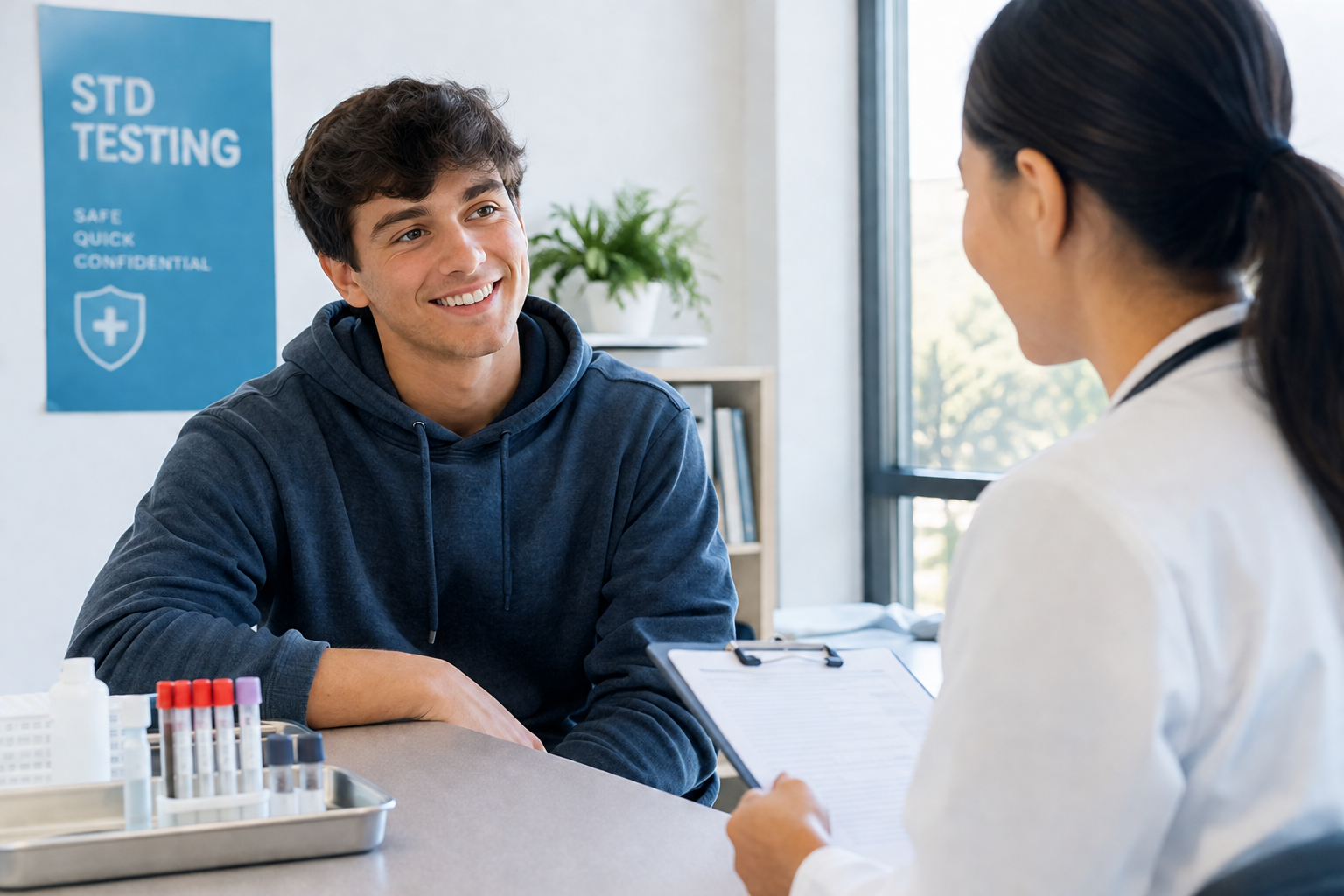
Going back to college often means returning to a busy environment filled with new classes, roommates, social events, sports, organizations, and relationships. With so many changes happening at once, routine healthcare can easily move down the priority list.
Sexual health deserves attention, especially for students who are sexually active or beginning new relationships. Sexually transmitted diseases (STDs), also commonly called sexually transmitted infections (STIs), can occur without noticeable symptoms. A person can feel completely healthy while still having an infection that can potentially be passed to a partner. You can learn more about how these infections develop and affect the body through resources like MedlinePlus.
At UNI Urgent Care Centers, our services include STD testing as part of our healthcare offerings. Our urgent care centers serve patients of all ages, and we provide convenient medical care for many non-life-threatening concerns. Our locations also offer on-site laboratory services, helping make necessary testing more accessible.
Before heading back to campus, scheduling appropriate testing can be a practical way to take control of your health and start the semester informed.
Why College Students Should Consider STD Testing
College students may experience changes in relationships, sexual partners, and living situations. New relationships can develop quickly, and conversations about sexual health may not always happen before sexual activity.
Testing is important because many STDs do not immediately cause symptoms. Others may produce symptoms that seem minor or resemble other common health problems. For detailed insights into symptom recognition, medical professionals often reference guidelines from the Mayo Clinic.
Depending on the infection, symptoms can include unusual discharge, burning during urination, sores, blisters, itching, pelvic discomfort, testicular pain, or changes around the genital area. However, having no symptoms does not necessarily mean there is no infection.
Regular testing gives sexually active individuals an opportunity to identify potential infections and seek appropriate medical care.
When Should College Students Get Tested?
There is no single testing schedule that applies to every student. The appropriate timing depends on factors such as sexual activity, number of partners, protection used, previous test results, symptoms, and possible exposure.
Testing may be appropriate before returning to school, particularly if a student has had a new partner, multiple partners, unprotected sexual contact, or another situation that could have resulted in exposure.
Testing is also important when symptoms develop or when a sexual partner reports a diagnosis.
For students who are unsure whether testing is appropriate, speaking with a healthcare provider can help determine what makes sense based on individual circumstances.
Common Reasons to Seek STD Testing
Students may consider testing when:
-
Starting a new sexual relationship
-
Having a new sexual partner
-
Having multiple sexual partners
-
Having sex without a condom or other barrier method
-
A partner has tested positive for an STD
-
Symptoms such as sores, discharge, or burning develop
-
A condom breaks or slips
-
Returning from a period of increased sexual activity
-
A healthcare provider recommends testing
Testing should not be viewed as an accusation or judgment about anyone’s behavior. It is simply one part of responsible healthcare.
What Can STD Testing Detect?
STD testing can involve different types of tests depending on the infection being considered and the patient’s circumstances. Medical overviews provided by the Cleveland Clinic offer great context on how diverse these diagnostic approaches can be.
Testing May Include Different Sample Types
Depending on the situation, testing may use urine, blood, swabs, or other samples. The appropriate test depends on the symptoms, possible exposure, and infection being evaluated.
At UNI Urgent Care, our website lists STD testing among our urgent care services and notes that our facilities provide various STD testing options, including HIV testing.
Because testing needs differ from person to person, our providers can discuss the concern and determine what evaluation is appropriate.
Why One Test May Not Check for Everything
A common misconception is that one STD test automatically checks for every possible infection. In reality, different infections require different testing methods.
Some infections are primarily evaluated through urine or swab testing, while others may require blood testing. Timing after exposure can also affect whether an infection is detectable.
For that reason, students should provide accurate information about symptoms, recent sexual activity, and possible exposure. Honest communication helps our healthcare providers make better-informed testing recommendations.
What to Expect During an STD Testing Visit
For many college students, the biggest obstacle to getting tested is uncertainty about what will happen during the appointment.
Your Visit Starts With a Health Discussion
Our healthcare team may ask questions about symptoms, recent sexual activity, possible exposure, and relevant medical history. These questions help determine which testing may be appropriate.
Students do not need to feel embarrassed about discussing sexual health. These conversations are part of medical care, and accurate information helps providers make appropriate recommendations.
Testing Depends on Your Situation
The specific testing process depends on what is being evaluated. Some tests may involve urine or blood, while others may require a swab.
Our urgent care services include on-site laboratory testing, which can support convenient evaluation for a variety of healthcare concerns.
Students should follow any instructions provided by our healthcare team and ask questions if they are unsure about preparation, results, or follow-up.
Why Testing Before College Can Be Convenient
The weeks before classes begin can be hectic. Students may be shopping for supplies, moving into housing, completing registration, and preparing for a new academic schedule.
Adding healthcare to that checklist can make it easier to address concerns before campus life becomes demanding.
Walk-In Care Can Make Testing Easier
UNI Urgent Care accepts walk-ins for most services, making urgent and routine healthcare more convenient for patients who may not have time for a lengthy scheduling process.
This can be particularly useful for students whose schedules change frequently.
Students can also review our locations and available services before visiting to determine which location is most convenient.
STD Prevention While Away at College
Testing is important, but prevention remains another major part of sexual health.
Use Protection Consistently
Condoms and other barrier methods can reduce the risk of transmitting many sexually transmitted infections when used correctly and consistently.
Students should also remember that some infections can spread through skin-to-skin contact and may not be completely prevented by condoms.
Communicate With Partners
Talking about sexual health before sexual activity can help partners make informed decisions.
Conversations may include previous testing, current partners, protection, symptoms, and whether either person has received a positive diagnosis.
While these conversations can feel uncomfortable, they can contribute to healthier relationships and better decision-making.
Do Not Ignore Symptoms
Students sometimes delay care because they assume symptoms will disappear on their own. That approach can allow certain infections to remain untreated.
Symptoms such as genital sores, unusual discharge, burning during urination, pelvic pain, testicular pain, or unexplained irritation should be evaluated by a healthcare professional.
If symptoms are severe or accompanied by significant pain, fever, or other concerning changes, prompt medical evaluation is appropriate.
What If an STD Test Is Positive?
Receiving a positive test result can be stressful, but it is a medical issue that should be addressed rather than ignored.
Follow the Recommended Treatment Plan
Different infections require different approaches. Some can be treated with medication, while others may require ongoing management.
Our providers can discuss appropriate next steps based on the test results and medical circumstances.
Students should take medications exactly as directed and complete treatment when instructed.
Consider Your Sexual Partners
Depending on the infection, recent sexual partners may need testing or treatment as well. A healthcare provider can explain what steps are appropriate.
Until a healthcare professional advises otherwise, students should take precautions to reduce the possibility of passing an infection to another person.
STD Testing and Primary Care
STD testing does not have to exist separately from overall healthcare.
At MyPrimaryCare, our primary care services include routine health screenings, preventive care and vaccinations, chronic condition management, and health education and guidance. Primary care appointments are available at our Washington Road location in Westminster.
Building a Healthcare Routine in College
College is an opportunity to establish healthcare habits that can continue into adulthood.
Along with sexual health testing when appropriate, students can benefit from maintaining recommended vaccinations, routine screenings, preventive care, and regular communication with healthcare providers.
Having an established healthcare option can also make it easier to seek care when unexpected symptoms appear during the semester.
Frequently Asked Questions About STD Testing for College Students
How often should college students get STD testing?
There is no universal schedule. Testing frequency depends on sexual activity, partners, protection, symptoms, and potential exposure. A healthcare provider can help determine an appropriate testing plan.
Can I have an STD without symptoms?
Yes. Some sexually transmitted infections can cause few or no noticeable symptoms. Testing may therefore be important even when you feel healthy.
Should I get tested before going back to college?
Testing may be appropriate if you have had a new partner, possible exposure, unprotected sexual contact, or symptoms. If you are uncertain, discussing your situation with a healthcare provider is a practical next step.
What happens during an STD testing appointment?
The visit generally begins with a discussion of your health and possible exposure. Depending on what is being evaluated, testing may involve urine, blood, a swab, or another appropriate sample.
Does UNI Urgent Care offer STD testing?
Yes. STD testing is listed among our urgent care services, and our website specifically notes that various STD testing options, including HIV testing, are available.
Do I need an appointment for STD testing?
Our urgent care centers accept walk-ins for most services. Students can contact the location they plan to visit if they have questions about availability or testing procedures.
What should I do if my partner tests positive?
Contact a healthcare provider and explain the situation. Testing and appropriate follow-up may be recommended depending on the infection and timing of exposure.
Can STD testing be part of regular healthcare?
Yes. Sexual health is one component of overall health. Students can discuss STD testing with a healthcare provider as part of preventive or primary care when appropriate.
Conclusion
Going back to college is about more than preparing for classes. It is also an opportunity to take responsibility for your health and establish good habits for the semester ahead.
STD testing can be an important part of sexual healthcare, particularly for students who are sexually active, have new partners, have experienced possible exposure, or develop symptoms. Because some infections may not cause noticeable symptoms, testing can provide information that symptoms alone cannot.
At UNI Urgent Care Centers, our goal is to make healthcare convenient and accessible. Our services include STD testing, on-site laboratory testing, urgent care for a wide range of non-life-threatening concerns, and primary care services.
Before heading back to campus, consider making your health part of your preparation. If you have questions about STD testing or need medical evaluation, our team is here to help.
If you need STD testing before returning to college, contact UNI Urgent Care Centers to learn more about our available services and locations. Walk-ins are accepted for most urgent care services, making it easier to receive care around a busy student schedule.
UNI Urgent Care Centers / MyPrimaryCare
📍 Corporate Office Address: 826 Washington Road, Suite 110A, Westminster, MD 21157
📞 Phone: (410) 751-7480
🌐 Website: uniurgentcare.com
Our team is ready to help you take the next step toward informed, responsible healthcare before returning to campus.
