
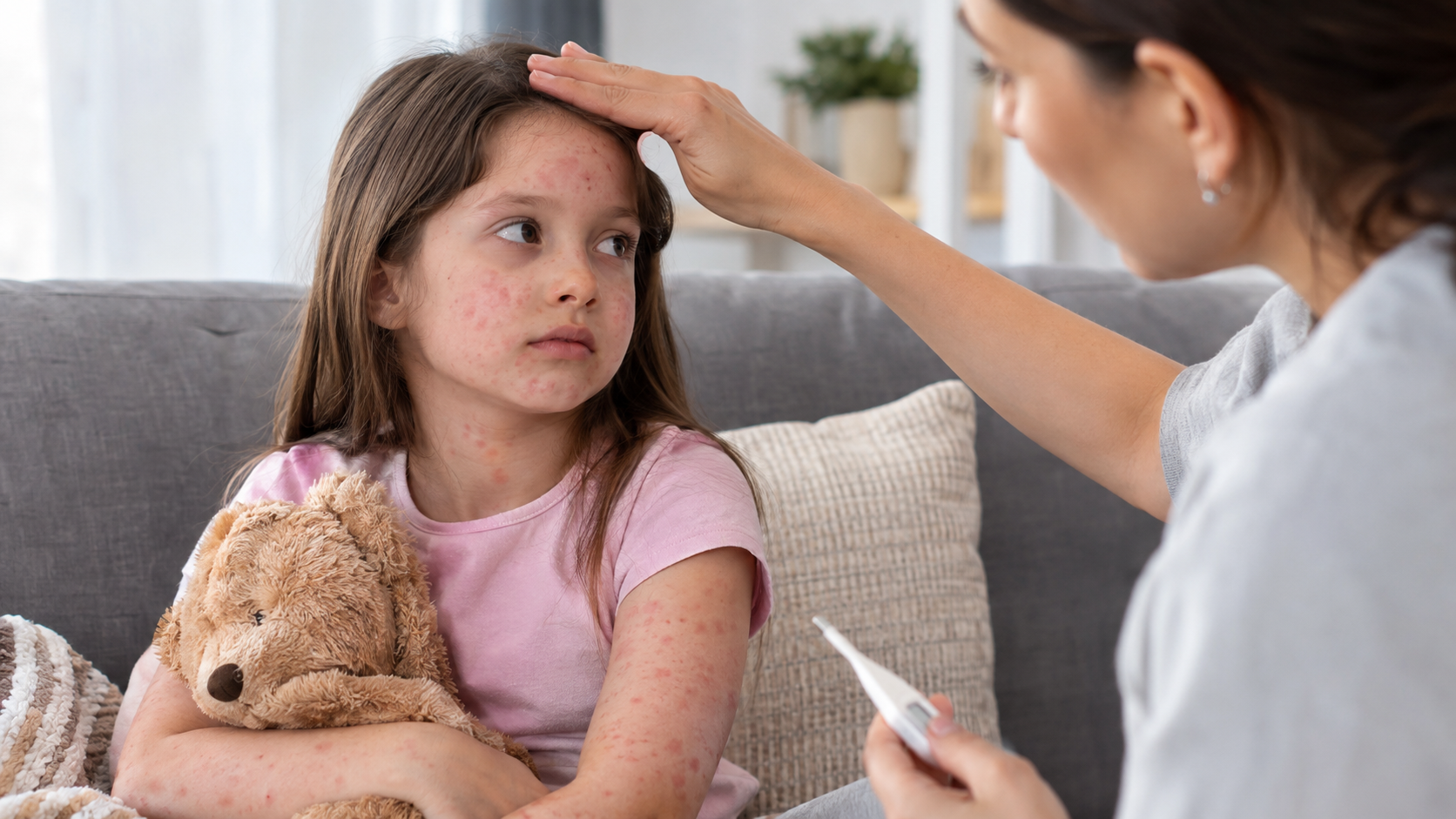
Measles is a highly contagious viral infection that can cause high fever, cough, runny nose, red or watery eyes, and a characteristic rash. Although vaccination has made measles uncommon in the United States, outbreaks can still occur. In Maryland, this is especially relevant this fall: the Maryland Department of Health reported 55 confirmed measles cases in 2026 as of October 1 and said an outbreak was occurring among unvaccinated individuals in Carroll, Cecil, and St. Mary’s counties, while noting no evidence of widespread community transmission at that time.
Recognizing symptoms early, understanding transmission, and knowing what to do after exposure can help protect families and vulnerable community members.
What Is Measles and Why Is It So Contagious?
Measles, also called rubeola, is a respiratory viral illness. It spreads through the air when an infected person coughs or sneezes, and the virus can remain in an airspace for up to two hours after an infected person leaves. A person with measles can spread the virus from about four days before the rash appears through four days afterward. Among people who are not immune and are exposed to an infected person, as many as 90% may become infected.
Because measles can spread before the rash develops, someone may unknowingly expose others in shared indoor spaces. This is one reason we encourage patients to call ahead rather than simply walking into a waiting room.
Early Measles Symptoms and How They Progress
Measles symptoms generally begin about 7 to 15 days after exposure. Early symptoms often resemble other respiratory infections, which can make the illness difficult to recognize at first. Common signs include a high fever, cough, runny nose, and red or watery eyes.
The illness begins with fever and respiratory symptoms before the rash appears. Some people also develop tiny white spots called Koplik spots inside the mouth. These may occur before the skin rash and can be an important clinical clue.
The fever can become quite high, sometimes exceeding 104°F. Because the early symptoms can look like influenza, COVID-19, another viral infection, or a routine childhood illness, it is important to consider recent exposure, vaccination history, travel, and other relevant circumstances when evaluating symptoms.
What Does a Measles Rash Look Like?
The measles rash is one of the most recognizable signs of infection, but it usually does not appear at the beginning of the illness. The rash typically develops several days after the initial fever and respiratory symptoms. It generally begins on the face or along the hairline and then spreads downward to the trunk, arms, and legs.
The rash is usually red and blotchy and can become widespread. Online images can provide general awareness, but cannot confirm a diagnosis because other conditions can also cause fever and a rash.
How Measles Can Resemble Other Illnesses
One challenge with measles is that its first symptoms are not unique. Fever, cough, congestion, runny nose, and irritated eyes can occur with many common respiratory infections. A rash can also occur with other viral illnesses, allergic reactions, medication reactions, and certain bacterial infections.
We do not recommend diagnosing measles from a rash alone. A healthcare professional may consider symptoms, exposure history, vaccination status, physical findings, and laboratory testing. Suspected cases also require infection-control measures and public-health coordination.
How Measles Spreads
Measles spreads primarily through the air. Breathing contaminated air in a room or being near an infected person can result in exposure. Because the virus can remain in the air for up to two hours, simply avoiding direct contact with an infected person may not eliminate the risk.
A person can also be contagious before the rash becomes visible, making prevention important in schools, child-care settings, workplaces, healthcare facilities, and households.
If you or your child may have been exposed, contact a healthcare provider promptly. Maryland health officials specifically advise people with possible measles symptoms or a possible exposure to call before going to a waiting room or emergency department so precautions can be arranged.
Who Is at Greater Risk for Complications?
Anyone without protection against measles can become infected, but complications are more concerning for certain groups. Infants and children younger than five, adults older than 20, pregnant people, and people with weakened immune systems have a higher risk of serious complications.
Complications can include ear infections and diarrhea, as well as pneumonia and encephalitis, which is inflammation of the brain. Measles during pregnancy can also be associated with serious complications and adverse pregnancy outcomes.
Vaccination helps reduce serious illness and limits opportunities for the virus to spread to vulnerable people.
Measles Vaccination and Prevention
The most effective way to prevent measles is vaccination. The measles vaccine is given as part of the MMR vaccine, which protects against measles, mumps, and rubella. CDC guidance recommends two routine doses for children: the first at 12–15 months and the second at 4–6 years.
Older children, adolescents, and adults who do not have evidence of immunity may need one or two doses depending on their circumstances and risk factors. People planning international travel may need special vaccination timing, so discussing travel plans with a healthcare provider is important.
Two doses of MMR vaccine are about 97% effective at preventing measles, compared with about 93% effectiveness after one dose.
Families can also reduce transmission by staying home when sick, following public-health guidance after exposure, and avoiding contact with vulnerable people. Keeping vaccination records current also helps confirm protection.
What Should You Do After a Possible Measles Exposure?
If you were in the same location as someone with confirmed or suspected measles, do not wait for symptoms before contacting a healthcare provider. We recommend calling first and explaining when and where the exposure occurred, whether symptoms have developed, and the person’s vaccination history.
A healthcare provider can help determine whether there is evidence of immunity and whether post-exposure measures may be appropriate. For people without immunity, MMR vaccination within 72 hours of exposure may provide protection or reduce the severity of illness. For certain people at higher risk, immune globulin may be considered within six days of exposure.
After an exposure, monitoring for fever, cough, runny nose, red or watery eyes, and rash is important. People who may have measles should follow medical and public-health instructions about staying home and avoiding settings where they could expose others.
Why You Should Call Ahead Before Coming to Urgent Care
If measles is possible, walking into a busy waiting room without warning can expose other patients and healthcare workers. This matters because some people in a medical setting may be infants or people with weakened immune systems.
Calling ahead allows our team to receive the information before arrival and determine the safest way to proceed. Maryland health officials and the CDC both advise people with suspected measles to call before arriving at a healthcare facility.
At UNI Urgent Care, our services include evaluation of many illnesses and symptoms, along with in-house testing and other urgent-care services. However, suspected measles requires special infection-control considerations, so contacting us first is an important step rather than simply walking in.
Urgent Care vs. Emergency Care for Possible Measles
Not every person with possible measles needs an emergency department, but measles can cause serious complications. Our urgent care team can help evaluate concerning but non-life-threatening symptoms and determine whether further medical care is needed.
A person with fever, cough, red eyes, or a developing rash should contact a healthcare provider promptly, especially after exposure. However, emergency care is appropriate for warning signs such as severe difficulty breathing, bluish or gray skin, severe dehydration, a seizure, significant confusion or difficulty waking, severe weakness, or other symptoms that suggest a life-threatening complication.
If emergency symptoms are present, call 911 or seek emergency medical attention. If measles is suspected, have someone call the emergency department before arrival when possible so staff can prepare and reduce exposure to others.
How UNI Urgent Care Can Help
Our team provides urgent care for non-life-threatening illnesses and injuries, including in-house laboratory testing, rapid flu testing, respiratory illness evaluation, vaccinations, and medical services. Our primary care services include preventive care, vaccinations, routine screenings, and health guidance.
When someone has concerning symptoms that could represent measles or another infection, our role is to evaluate the situation, consider the available clinical information, and help determine the appropriate next step. That may include additional testing, coordination with another healthcare provider or public-health officials, or emergency evaluation when symptoms require a higher level of care.
For suspected measles, please call before coming to our office. This helps protect other patients and our healthcare team while providing appropriate guidance.
Frequently Asked Questions
Can adults get measles?
Yes. Adults without adequate immunity can develop measles. Adults over 20 are also among the groups at greater risk for complications.
How long after exposure do measles symptoms appear?
Symptoms commonly appear about 7–15 days after exposure, although timing can vary.
When does the measles rash appear?
The rash usually appears after several days of fever and respiratory symptoms and generally spreads from the face or hairline downward.
Is measles contagious before the rash?
Yes. A person can spread measles beginning about four days before the rash appears and through four days afterward.
What should I do if I think I have measles?
Stay home, avoid contact with others, and call a healthcare provider before going to a clinic, urgent care center, or emergency department. This allows staff to provide instructions that reduce potential exposure.
Can measles be prevented after exposure?
In some situations, yes. MMR vaccination may help when given promptly after exposure, while immune globulin may be considered for certain high-risk people. Contact a healthcare provider immediately for individualized guidance.
Conclusion
Knowing the early measles symptoms, recognizing the characteristic rash, and understanding how quickly measles can spread can help Maryland families respond appropriately. Current Maryland health information makes awareness especially important this fall, with confirmed cases reported in 2026 and an outbreak involving three counties.
Prevention begins with vaccination and continues with sensible steps after a possible exposure. If symptoms develop, do not simply assume that a fever and rash are another routine illness. Contact a healthcare provider, explain the possible exposure, and call ahead before arriving at a medical facility.
Our team at UNI Urgent Care is here to evaluate concerning, non-life-threatening symptoms and help determine the appropriate next step. Contact us and also learn more about our locations and services at UNI Urgent Care.
UNI Urgent Care Centers
📍 Corporate Office: 826 Washington Road, Suite 110A, Westminster, MD 21157
📞 Phone: (410) 751-7480
🌐 Website: uniurgentcare.com
This information is educational and does not replace individualized medical advice. For severe or life-threatening symptoms, call 911 or seek emergency care.
